
@Sheba

Research Projects
We aim to chart the unrecognized layers of human metabolism by studying uncharacterized metabolites that are strongly linked to disease but remain chemically and functionally unexplored.
Our goals are to:
-
Determine the chemical structures of previously uncharacterized human metabolites
-
Identify the enzymes and pathways responsible for producing and degrading these molecules
-
Understand how these metabolites and enzymes influence the onset and progression of disease
-
Develop new blood-based diagnostics to detect early disease states and monitor outcomes
-
Translate these insights into novel therapeutic strategies targeting newly uncovered pathways
Experimental
Revealing the chemical structures of novel metabolites
A central challenge in studying uncharacterized metabolites is determining their chemical structure - a necessary first step toward understanding their biological roles and relevance to disease. Many of these metabolites are present in human blood at extremely low concentrations, typically in the micromolar range, making them inaccessible to gold-standard structural techniques like NMR or crystallography, which require tens of milligrams of pure compound. To address this, we employ an alternative sourcing strategy: identifying mammalian tissues in which these metabolites are naturally enriched. By extracting and purifying material from large quantities of such tissue - most notably bovine liver - we can isolate sufficient quantities for downstream structural analysis. This process involves large-scale tissue acquisition, targeted fractionation using preparative liquid chromatography, and iterative refinement guided by high-resolution mass spectrometry. These efforts allow us to bridge the gap between clinical metabolomics and structural biochemistry, enabling precise characterization of metabolites that would otherwise remain inaccessible.

Identifying novel enzymes and biochemical pathways
Pinpointing the enzymes that process orphan metabolites is essential for uncovering their biological roles and integrating them into known or novel metabolic pathways. Because these metabolites fall outside the scope of standard pathway databases, we are developing new, unbiased biochemical methods designed specifically for enzyme discovery at scale. Building on the conceptual foundations of approaches like MIDAS and PROMIS, we engineer proteome-level assays that capture physical and functional interactions between uncharacterized metabolites and candidate enzymes. These methods go beyond existing tools by enabling higher sensitivity, broader coverage, and compatibility with low-abundance compounds. Combined with orthogonal candidate-based strategies - such as co-expression and functional genomics - we are constructing a robust discovery pipeline to map the enzymatic machinery behind the hidden metabolome.

Identifying the functional contribution of novel metabolites
We use functional studies in mouse models to determine how uncharacterized metabolites and their associated enzymes influence the development and progression of cardiovascular disease. Using Cre/LoxP-based systems, we selectively activate or delete candidate enzymes in specific tissues to dissect the role of individual pathways in vivo. In future experiments, we will administer selected metabolites during defined stages of disease onset and progression, as well as deploy antibodies to block specific metabolites and evaluate their functional impact. These targeted perturbations will allow us to map affected physiological processes, identify primary target organs, and distinguish systemic from tissue-specific effects. By combining genetic and biochemical interventions, we aim to move from observational data to a mechanistic understanding of how novel metabolic pathways drive disease.

Computational
Improving Metabolite Annotation Through Improved In-Silico Fragmentation
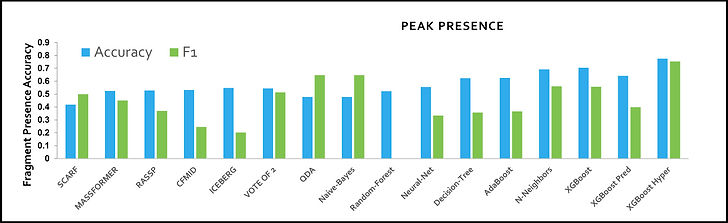
A key step in identifying novel metabolites is matching experimental MS/MS spectra to candidate chemical structures. However, current in-silico fragmentation tools are often inaccurate, limiting our ability to annotate unknown features detected in untargeted metabolomics. To overcome this challenge, we are developing improved machine learning-based methods that integrate multiple predictive approaches to generate more accurate and interpretable fragmentation spectra. This enhanced capability enables us to systematically annotate previously uncharacterized metabolites, even in the absence of authentic standards or reference spectra. By improving spectral interpretation at scale, this project directly supports our broader goals of chemical structure elucidation, enzyme identification, and the functional investigation of orphan metabolic pathways linked to disease.
AI-Guided Discovery of Therapeutic Drug Combinations for Atherosclerosis
Macrophages are key drivers of atherosclerosis, where their transformation into lipid-engorged foam cells fuels chronic inflammation and plaque progression. Reprogramming these cells toward anti-inflammatory states represents a promising therapeutic strategy. However, identifying effective drug combinations from vast chemical libraries is a major bottleneck - particularly when testing must account for complex transcriptional responses and context-specific synergy. To address this, we are developing an AI-driven framework based on a deep generative foundation model that learns compact biological representations of macrophage responses to drug perturbations. The system leverages representation learning and multi-objective optimization to simulate how individual and combined compounds shift gene expression programs. This enables scalable, in silico prioritization of drug pairs predicted to counteract pro-atherogenic phenotypes. Top candidates are experimentally tested in THP1 cells and native human monocytes, forming a closed loop between AI prediction and functional validation. This project integrates systems pharmacology with advanced machine learning to accelerate discovery of targeted interventions for cardiovascular disease.
